

Ocarina of Time Remake vs N64 vs 3DS: What Changed
Compare the Ocarina of Time Switch 2 remake with the 1998 N64 original and 2011 3DS version: controls, graphics, voice, new systems and open questions.
Ocarina of Time has now been released three different ways: the 1998 Nintendo 64 original, the 2011 Nintendo 3DS remake, and the Switch 2 remake due on November 5, 2026. This page compares them using official announcements for the new version, labelled preview observations, and documented facts about the older two. For prices and pre-orders, see the release date page.
How do the three versions compare at a glance?
| Nintendo 64 (1998) | Nintendo 3DS (2011) | Nintendo Switch 2 (2026) | |
|---|---|---|---|
| Developer | Nintendo EAD | Grezzo | Not announced (Nintendo; producers Eiji Aonuma and Hidemaro Fujibayashi) |
| Release | Nov 21, 1998 (JP), Nov 23 (NA), Dec 11 (EU) | June 16, 2011 (JP/EU), June 19 (NA) | November 5, 2026 |
| Type | Original | Remake of the same design with new graphics | Full remake, “built from the ground up” |
| Frame rate | 20 fps | 30 fps | Not announced |
| Jumping | Automatic at ledges | Automatic at ledges | Free jumping on a button |
| Dash | No | No | Yes |
| Camera | Restricted, no free rotation | Restricted, no free rotation | Free camera on the right stick |
| Aiming | Stick | Gyro or stick | Motion controls |
| Item handling | Boots changed in the pause menu | Touch screen for items and boots | Quick swapping on the fly |
| Voice | Text-only dialogue | Text-only dialogue | Fully voiced cutscenes; whether Link speaks is not confirmed |
| Music | Original soundtrack | Original soundtrack | Symphonic orchestral score |
| Quest log | None | None | Threads of Time |
| Hints | Navi | Navi plus Sheikah Stone hint videos | Navi’s role not detailed; Threads of Time shows objectives |
| Hard mode | Master Quest on a later GameCube disc | Master Quest, mirrored, double damage | Not announced |
| Rematches / boss rush | No | Boss Challenge | Monster rematches confirmed; 3DS-style boss rush rules not confirmed |
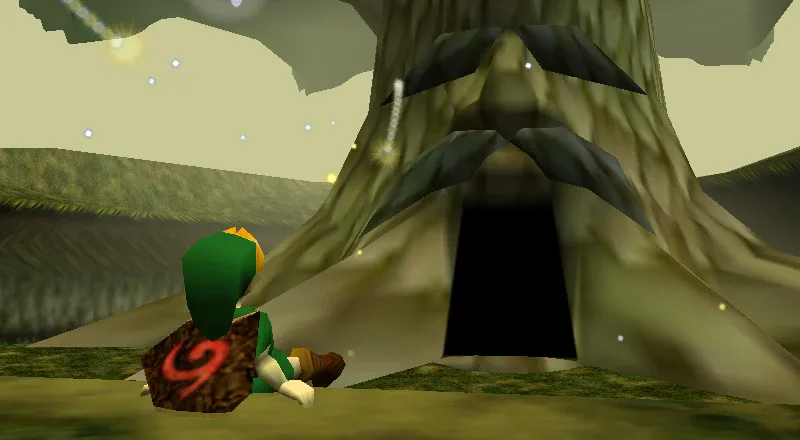
What did the 3DS version change from the N64 original?
The 3DS version is useful context because many people assume the Switch 2 remake builds on it. Grezzo kept the original design and changed the presentation and some convenience features:
- Real-time 3D backgrounds. Areas that used pre-rendered backdrops on N64, such as the Castle Town market, became real-time 3D.
- Touch screen equipment. Boots and items moved to the lower screen, which removed most pause-menu trips in the Water Temple.
- Gyro aiming for the slingshot, bow and boomerang.
- Sheikah Stones. Stones near Link’s house in Kokiri Forest and in the Temple of Time play short hint videos called Visions.
- Shard of Agony. The Stone of Agony relied on Rumble Pak vibration, so the 3DS replaced it with a sound cue.
- Master Quest unlocks after you beat the main game. It mirrors the world and doubles the damage enemies deal. Our Master Quest guide covers what it changes.
- Boss Challenge lets you refight bosses one at a time or in a row.
- Water Temple tweaks that make it easier to track where you are.
What does the Switch 2 remake change?
Everything in this section is from Nintendo’s own pages, its September 8 news release or the Direct. Each item is explained in more depth on the new features page.
Movement. A new dash and free jumping are the headline changes. Nintendo says you jump with a button press and dash by holding a button. This is the first version of the game where Link jumps on command.
Aiming, items and camera. Motion aiming returns in a new form, and Nintendo promises you can swap weapons and items “on the fly”. Nintendo says the right stick now controls the camera, which spins freely around Link.
Time of day. Time now passes everywhere, including towns and interiors, where the original stopped the clock. Nintendo says new people and enemies may appear after sunset.
Presentation. Visuals are completely overhauled, cutscenes are fully voiced and dialogue is expanded. The score is re-recorded as symphonic orchestral music. Nintendo says load times are faster and the game runs much smoother, without giving numbers. On compatible TVs you get HDR and VRR output, and the download is about 27 GB.
Threads of Time. A new menu recaps the story and shows your current objective. No earlier version had anything like it.
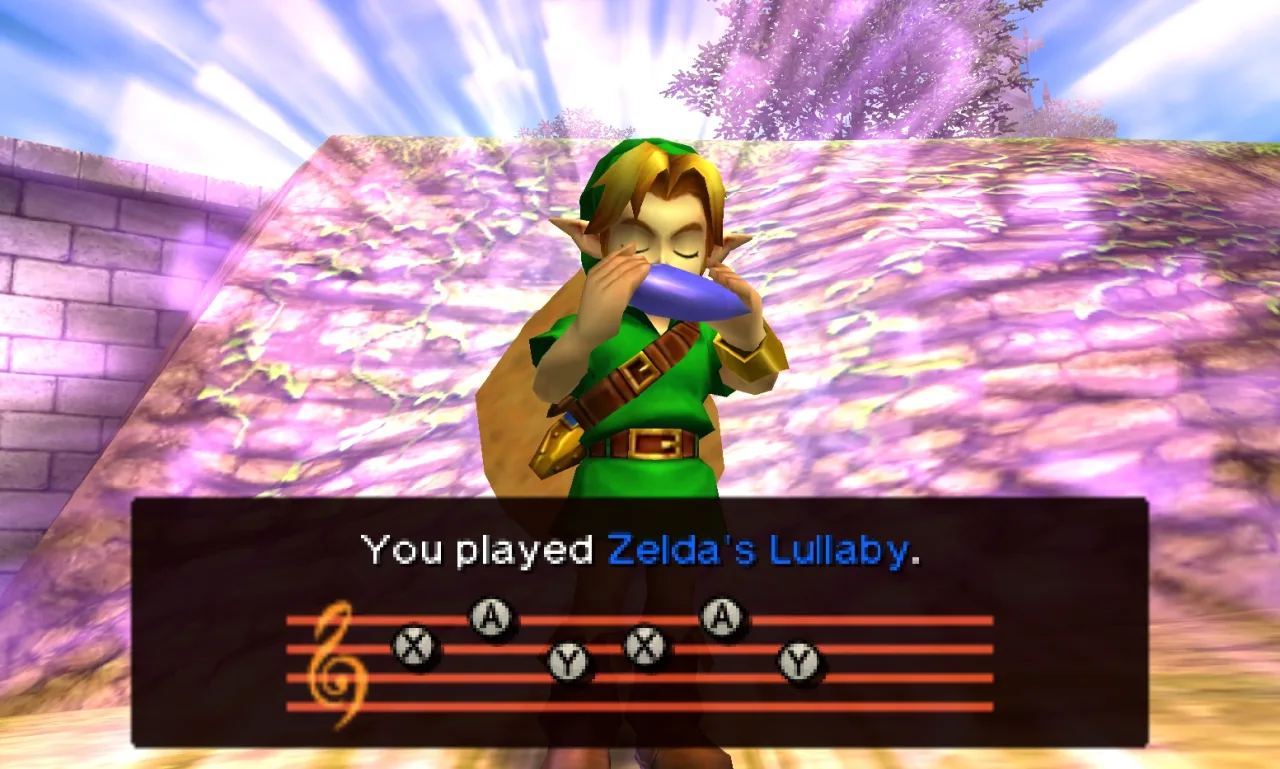
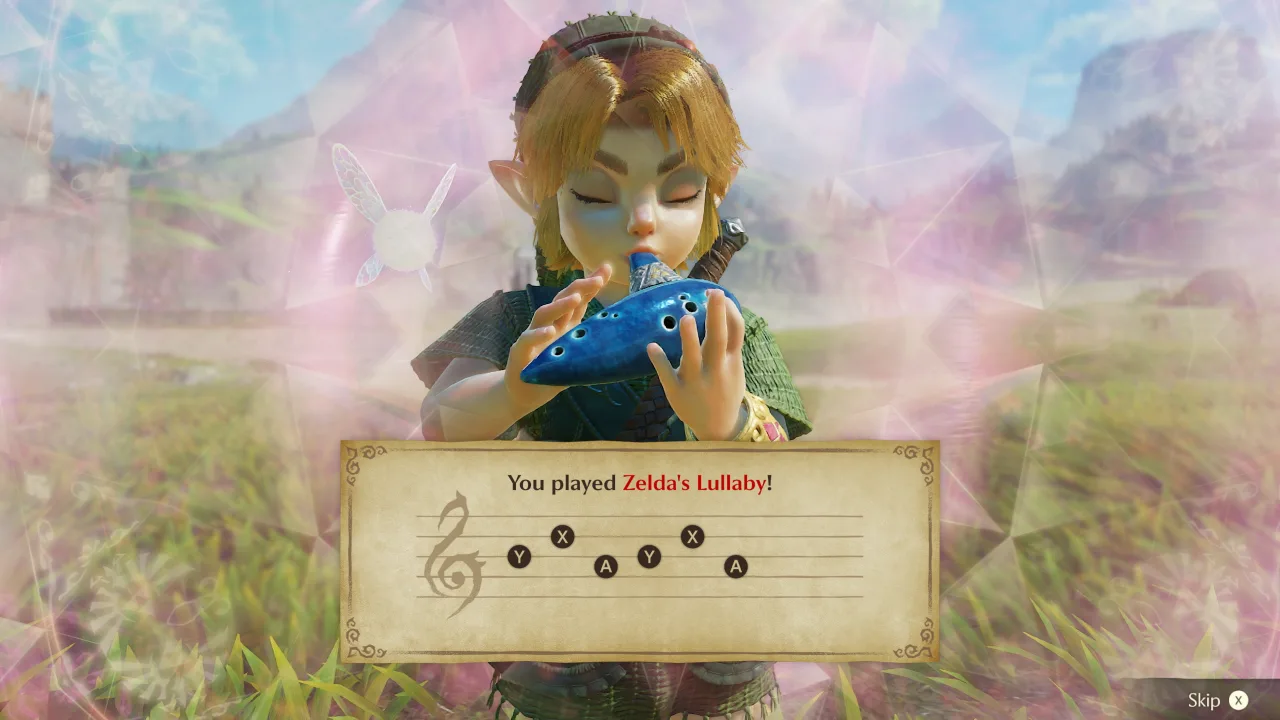
Ocarina input. Songs still work with buttons. You can also hum or play an instrument into the Switch 2 microphone.
Castle Town. The market had a fixed camera in the original. Nintendo says you can now explore it up close, including back alleys, with gossip from townspeople and minigames in the shops.
Extras. Young Link and Young Zelda amiibo unlock special masks in 2027, and the game supports Zelda Notes on your phone.
Is the remake open world?
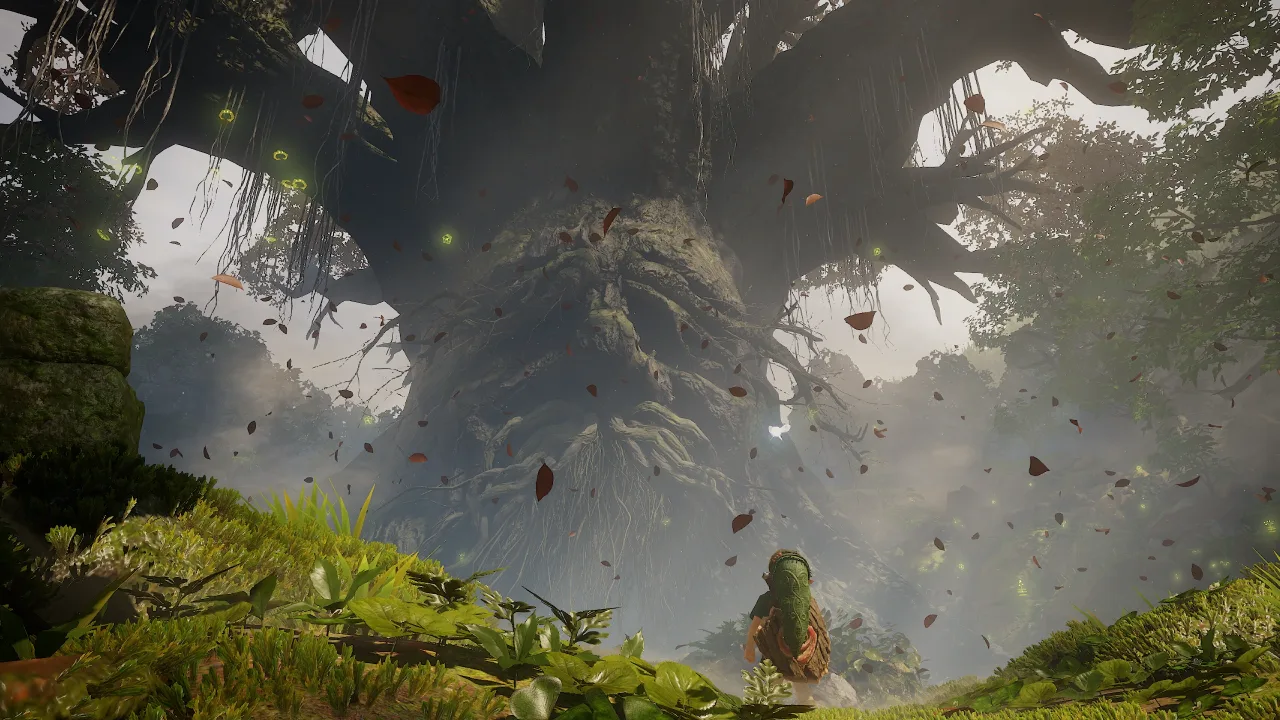
Not in the way Breath of the Wild is, and Nintendo has not used the term for this game. In the Direct, Aonuma says a loading screen still appears when you move from one area to another, and that the team kept it on purpose to stay true to the original. Nintendo’s own description keeps the original layout too: Hyrule Field sits in the middle as a gateway to the towns, the volcano, the lake and the desert.
What changes is how you cross that world. You can dash on foot, jump freely and turn the camera, you still get Epona to ride later in the quest, and time keeps passing wherever you are. Nintendo has not said whether dungeons can be tackled in a freer order. The Direct shows the opening in the original order.
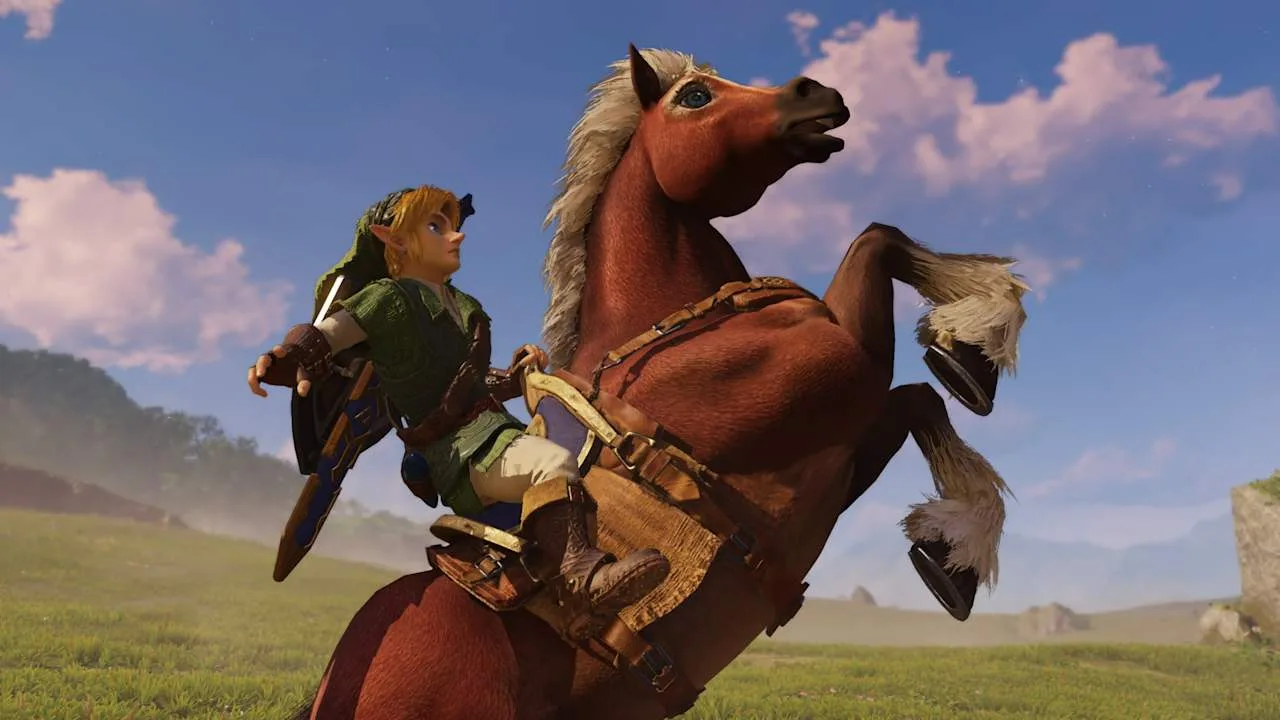
What did the October preview add?
The October 14 hands-on report describes revised Forest Temple puzzles and combat, and five bottle slots in the inventory. These are preview observations, not a full audit of the finished game. See our amiibo and preview update for selected examples.
Nintendo separately confirmed Hall of Fallen Heroes, where you can learn about defeated monsters and fight them again. This does not establish that the 3DS Boss Challenge returns with identical rules.
What is still unconfirmed for the remake?
As of October 6, 2026, Nintendo has not announced:
- Frame rate and resolution targets
- Master Quest, the Boss Challenge, or 3DS-style hint videos
- Difficulty options
- The full extent of dungeon changes and the final Heart Piece and Gold Skulltula totals
- Whether Link speaks, the voice cast, and which languages have voice acting
- Any way to carry saves over from the N64 or 3DS versions
On the art direction, Aonuma said in the Direct that the team did not want a simply realistic look. The aim was a refreshed world that still feels nostalgic. Whether it works for you is a matter of taste rather than a feature change.
Do N64 and 3DS guides still apply?
Probably for the big picture. The Direct shows the opening in the original order (Kokiri Forest, Inside the Deku Tree, Hyrule Field, Castle Town), and Aonuma says loading screens between areas were kept on purpose. Our full walkthrough covers the original route; it is not a verified remake route. Room layouts, puzzle solutions and collectible locations are a different matter. The October preview already reports revised puzzles, so we will check each dungeon page against the remake after launch.
If you want to play before November, how to play Ocarina of Time now compares the versions you can still get.
よくある質問
Is the Ocarina of Time remake a remaster or a full remake?
Is the Ocarina of Time remake based on the 3DS version?
Does the Ocarina of Time remake have better graphics than the 3DS version?
Will N64 walkthroughs work for the remake?
Is the Ocarina of Time remake open world?
関連記事
guides
BotW Inventory Expansion: Hestu Locations and Korok Seed Costs
How to expand weapon, bow and shield slots in Breath of the Wild: where Hestu goes, starting and maximum slots, and the Korok Seed cost of every upgrade (441 total).
guides
BotW Sheikah Slate Runes and Upgrades: Remote Bomb+, Stasis+, Sensor+
Every Sheikah Slate rune in Breath of the Wild: the four Great Plateau shrines, Camera and Sheikah Sensor, and the ancient parts Purah needs for each rune upgrade.
guides
BotW Temperature and Weather: Cold, Heat, Flame Guard and Lightning
Breath of the Wild temperature and weather: cold and heat levels, Death Mountain and Flame Guard, stacking resistance, lightning, rain climbing and the forecast.
この記事は役に立ちましたか?
フィードバックありがとうございます!