

Ocarina of Time Remake New Features: Every Confirmed Change
Every confirmed new feature in the Ocarina of Time Switch 2 remake: dash, jumping, motion aiming, free camera, Threads of Time, hummed songs and amiibo.
This page separates the October preview observations from the changes Nintendo has confirmed for the Switch 2 remake of Ocarina of Time. Each entry has two parts: what Nintendo said on its product pages, in its September 8 news release or in the Direct itself, and what it should mean for how you play. Where Nintendo has not confirmed a detail, we say so. Prices and dates are on the release date page.
How do movement and controls change?
Dash. Nintendo: Link can “cover long distances on foot using the new dash ability.” In play: crossing Hyrule Field on foot before you have Epona should take less time. In the Direct, series producer Eiji Aonuma dashes by holding a button down and recommends it for long trips. Nintendo has not said whether dashing uses stamina.
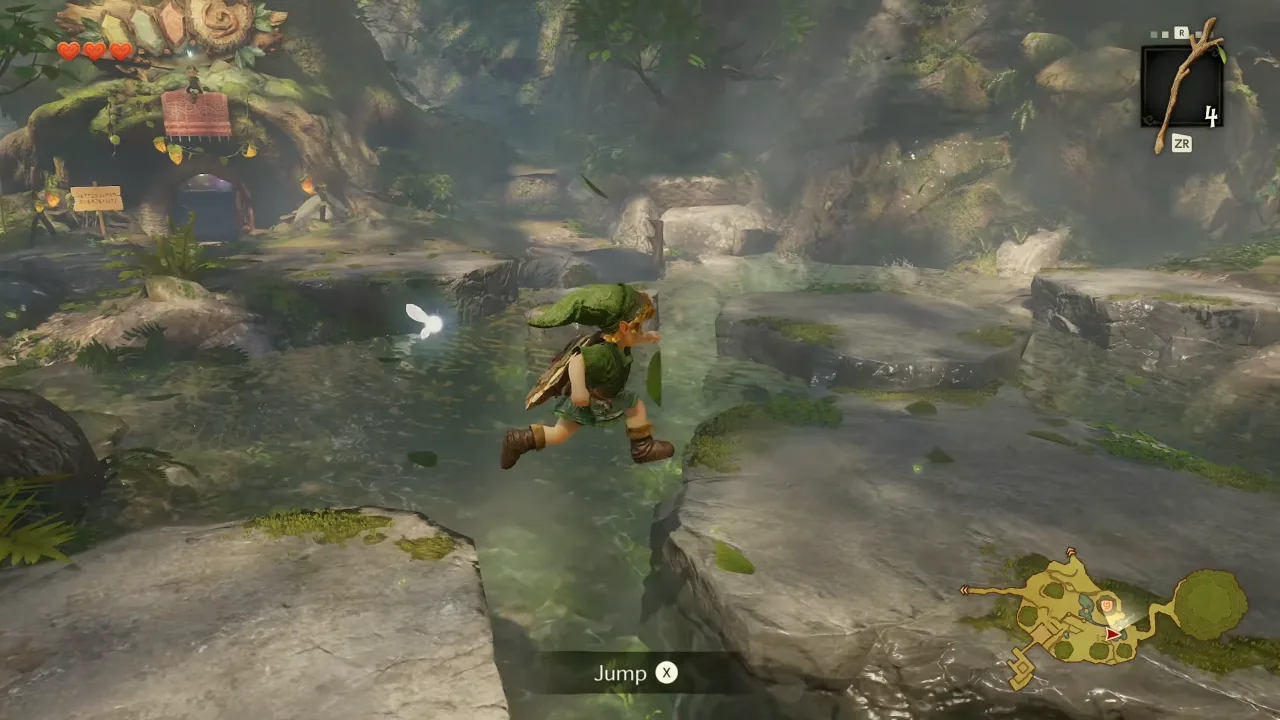
Free jumping. Nintendo: Link can “freely leap over gaps and obstacles.” In the Direct, Aonuma jumps across gaps with a button press and calls it a big change from the automatic jumps of the Nintendo 64 days. In play: this is the biggest change for anyone who knows the original. On Nintendo 64 and 3DS, Link jumped only when he ran off an edge. Platforming rooms that were built around automatic jumps may be easier. The October preview now reports examples of redesigned challenges; see the update below.
Motion aiming. Nintendo: aim “slingshots, bows and other tools with precision” using motion controls. In the Direct, the Fairy Slingshot is aimed with gyro, and pressing the Z-target button locks the shot onto a target. In play: this works like gyro aiming in the 3DS version. The Fairy Slingshot and Fairy Bow puzzles, such as eye switches and distant targets, get faster to line up.
Quick item swapping. Nintendo: “conveniently swap between weapons and items on the fly.” In the Direct, items switch with a single button, as in recent Zelda games. In play: on Nintendo 64 you changed equipment such as the Iron Boots from the pause menu, and the Water Temple asks you to do that again and again. The 3DS version already reworked this for the boots. Faster swapping should cut a lot of menu time in the remake too.
Free camera. Nintendo: “improved camera control with the Right Stick.” In the Direct, Aonuma spins the camera all the way around Link and notes that the Nintendo 64 controller had only one stick, so this was not possible before. In play: you can look around corners and up at ledges without relying on Z-targeting to recentre the view.
Swimming. Nintendo (Direct): Link can swim, speed up in the water and dive to reach things that have sunk. In play: Nintendo has not shown the controls in detail, so we will check how this changes the Water Temple and other underwater puzzles after launch.
What changes in the world?
Time passes everywhere. Nintendo: “Time passes no matter where you are in this game, and new faces – and foes – may surface after the sun has set.” In play: in the original, the clock stopped in towns and indoors. Now night can fall while you are in a town or a building. Nintendo has not said which people or enemies are new to the night.
Hyrule Castle Town rebuilt. Nintendo: in the Direct, Aonuma says Castle Town had a fixed camera in the original but can now be explored up close, including back alleys and parts that were only suggested before. Townspeople share gossip and shops run minigames. Nintendo’s news release adds that locations are “fully remodeled” and the camera moves freely in them. In play: expect more to do in the market. Nintendo has not said whether any of it is new side content with rewards.
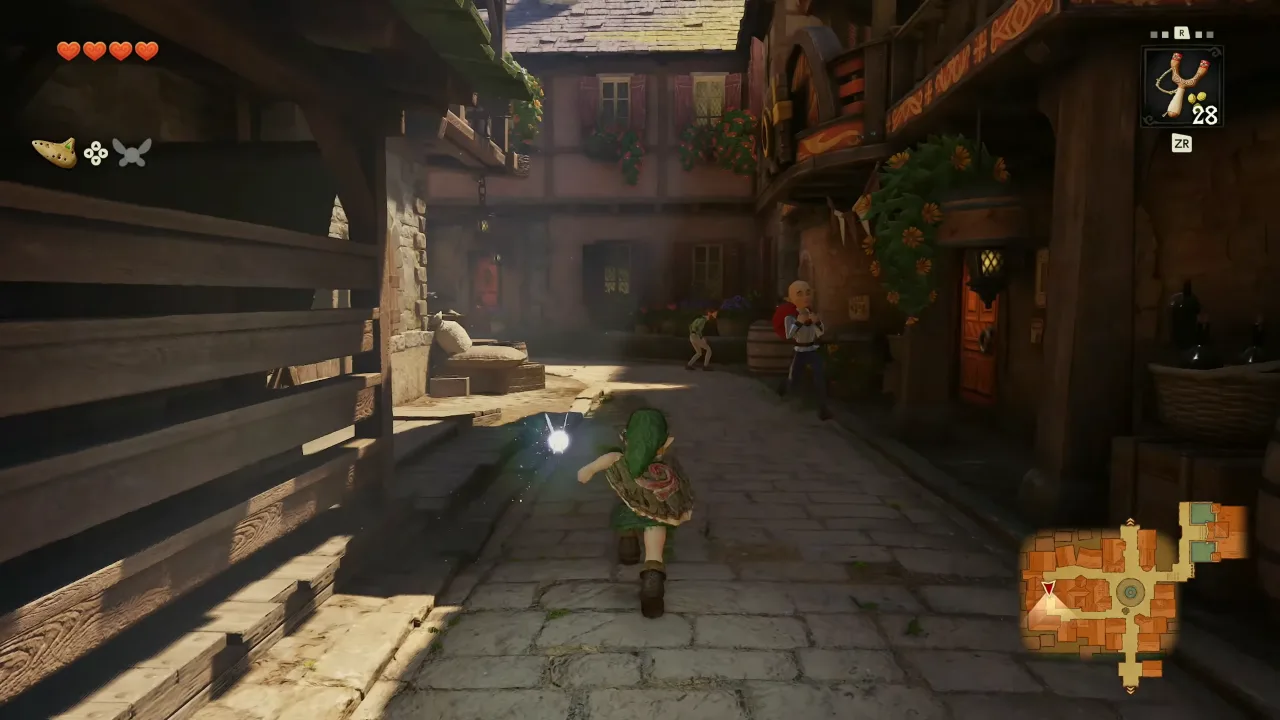
Overall layout. Nintendo: Aonuma says a loading screen still appears when you move between areas, kept on purpose to stay true to the original, while the news release says load times are faster. The Direct follows the original opening: Kokiri Forest, Inside the Deku Tree, Hyrule Field and Castle Town. In play: areas are still separate places joined by loading screens, and Nintendo has not called the remake open world. The dungeon order in our full walkthrough is likely to hold, but Nintendo has not said the whole structure is unchanged. Room-by-room details still need checking once the game is out.
What is Threads of Time?
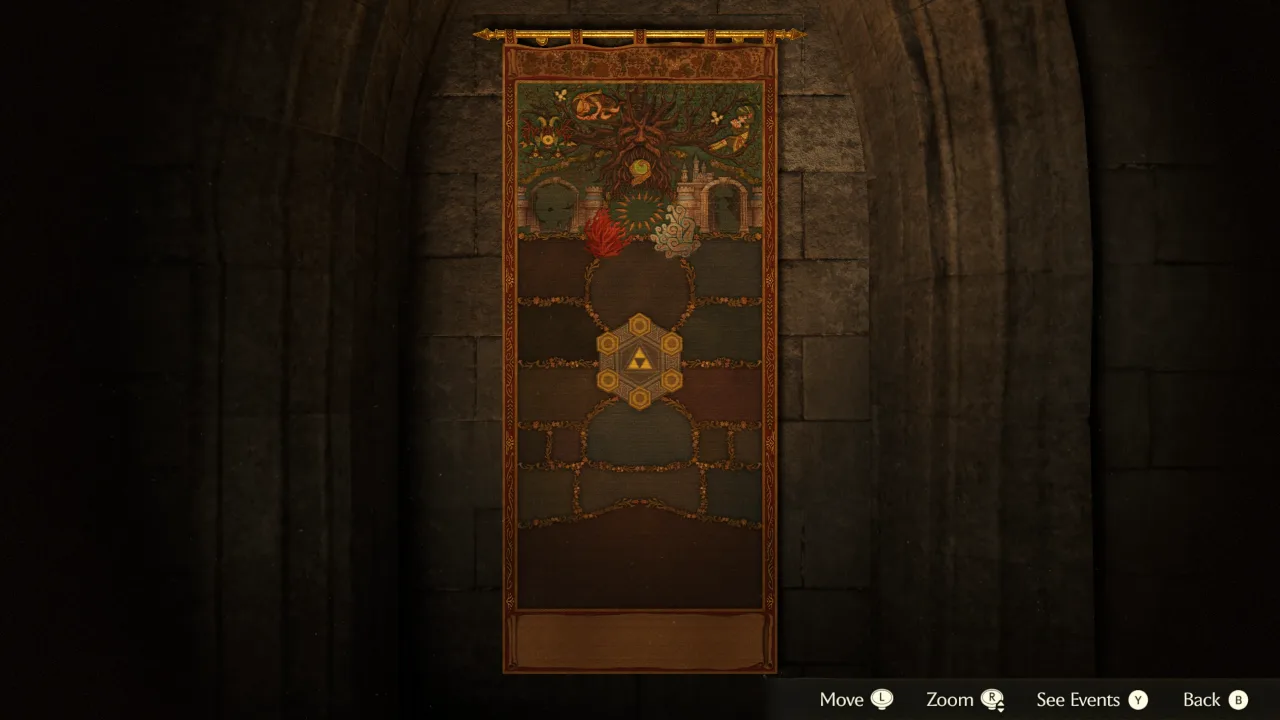
Nintendo: “Consult the Threads of Time to recap the story so far, see your current objectives and admire a grand tapestry.” In play: the original had no quest log. If you put it down for a week, you had to rely on Navi’s hints or your memory. Threads of Time is the fix. It should matter most in the adult half, where you move between several temples and two time periods.
How does the ocarina work now?
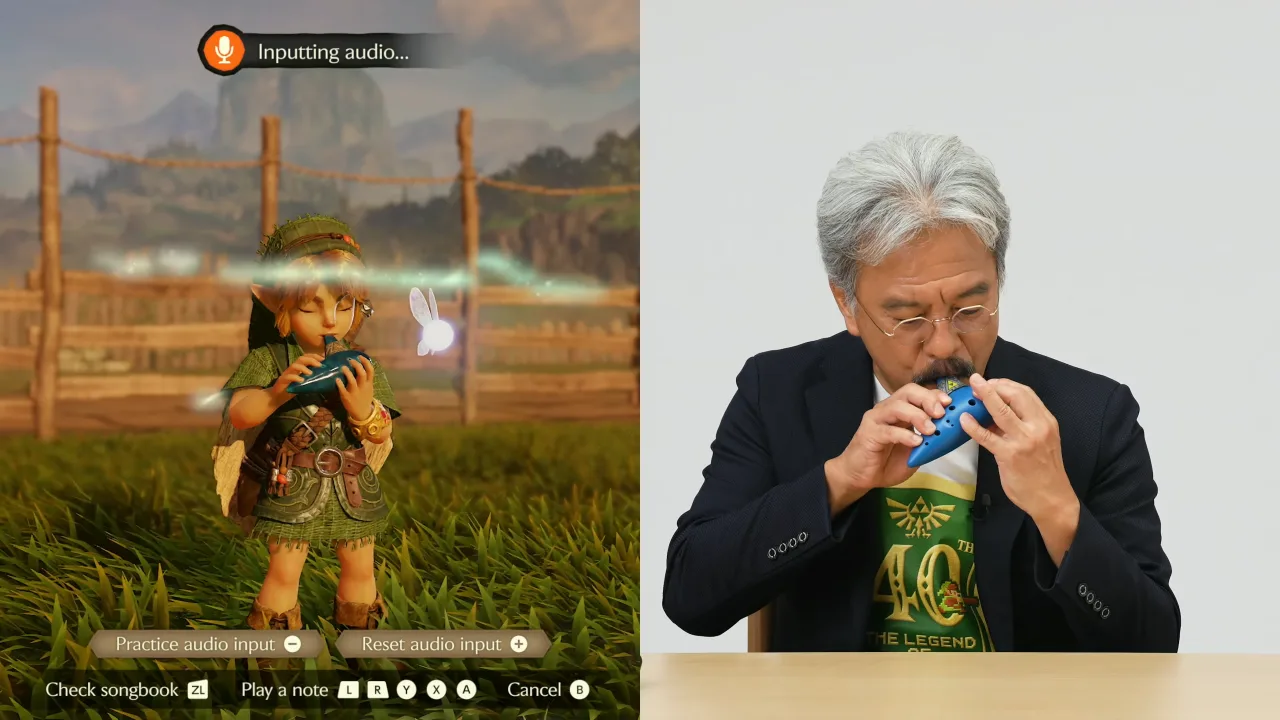
Nintendo: “Play the right notes using button controls, or try humming the song into the built-in microphone of Nintendo Switch 2.” Nintendo adds that the game responds to instruments too, including the two new ocarinas. Its Japanese site notes that sound may not be recognised correctly through an external microphone. In play: the button method stays, so the microphone is optional. It suits handheld play in a quiet room more than a noisy living room.
Two accessories use the same sound recognition:
| Accessory | Seller | Price | Release | What it does |
|---|---|---|---|---|
| Electric Ocarina of Time | HORI | $49.99 / 7,980 yen | November 5, 2026 | Button-operated, not blown; free-play mode plus an auto-play mode with 12 in-game songs |
| Playable ocarina | Nintendo Store | Not announced | Later in 2026, no exact date | A real instrument you blow into |
What changes in sound and presentation?
Voice acting. Nintendo: “fully voiced cutscenes” and “expanded dialogue.” The Direct trailer includes spoken lines from Saria, a Goron and Ganondorf, among others. Nintendo has not said whether Link himself speaks. In play: story scenes take longer, and new lines may clarify hints the original only gave in text boxes. The voice cast has not been announced.
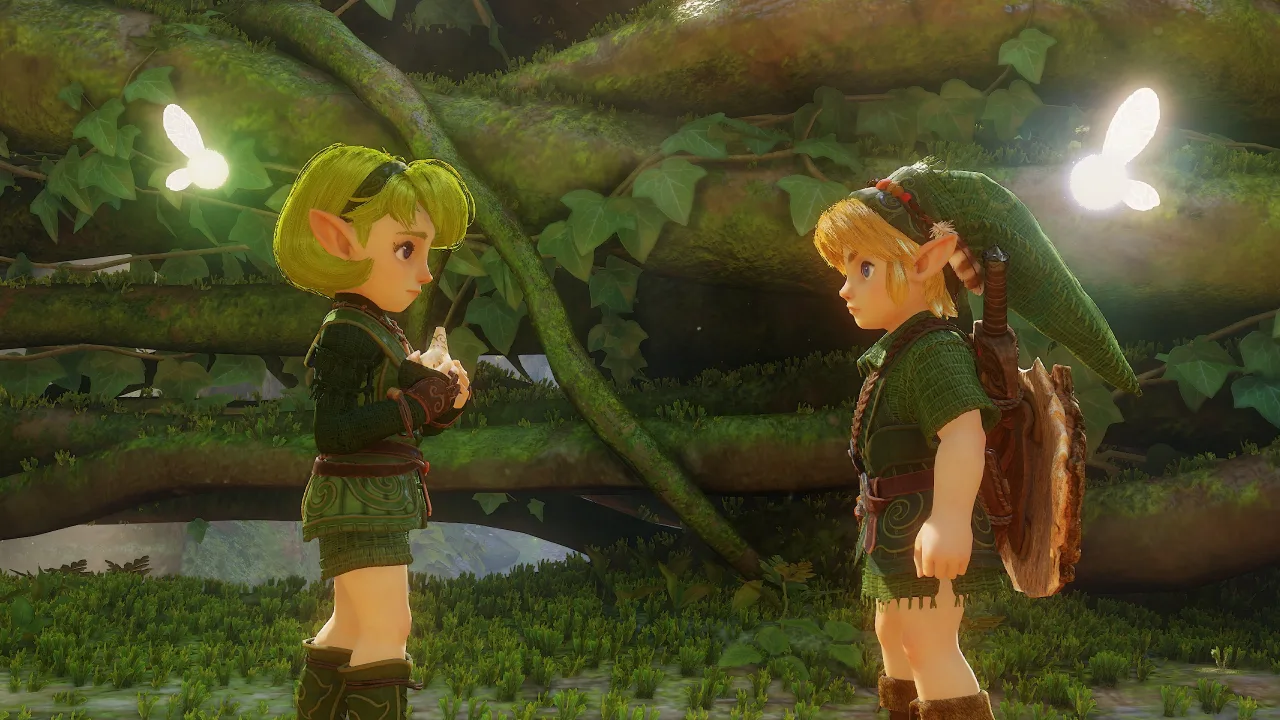
Orchestral music. Nintendo: “symphonic orchestral music,” and sound effects are refreshed too. In play: this changes how the game sounds, not how it plays. Songs you play on the ocarina still work by their notes.
Display and audio options. Nintendo: HDR and VRR output on compatible TVs, and linear PCM surround sound. Nintendo also says actions feel snappier and the game “runs much smoother”, but it has not announced a frame rate or resolution.
What do the amiibo and Zelda Notes add?
Young Link and Young Zelda amiibo. Nintendo: scanning either figure unlocks “special in-game masks that evoke a retro graphical style.” Both figures release in 2027, after the game. All existing Zelda series amiibo provide helpful items. The October 14 trailer coverage shows hearts, Green Potions and a Deku Stick; a complete figure-by-figure reward table and scan limits have not been supplied. See the latest amiibo update.
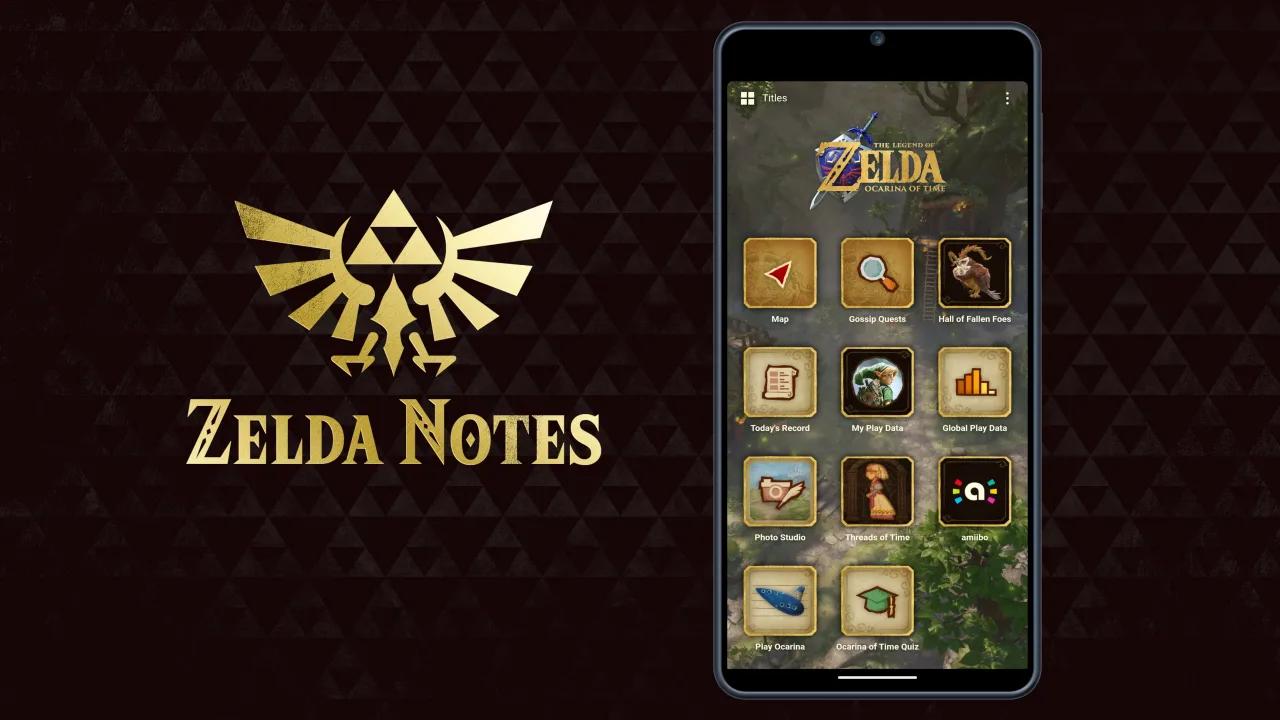
Zelda Notes. Nintendo: the phone service adds Today’s Record (a daily play log with photos taken automatically as you play), Gossip Quest (find a place from a hint image to earn points toward ocarina scores), Play Ocarina (a virtual ocarina with shareable QR-code scores) and the Ocarina of Time Quiz (over 2,000 questions, once a day, with extra tries bought with in-game rupees). Zelda Notes does not need a Nintendo Switch Online membership. In play: none of it is needed to finish the game. See the Zelda Notes guide for how the service works.
What did the October preview add?
The October 14 hands-on report describes revised Forest Temple puzzles and combat, and five bottle slots in the inventory. These are preview observations, not a full audit of the finished game. See our amiibo and preview update for selected examples.
Nintendo separately confirmed Hall of Fallen Heroes, where you can learn about defeated monsters and fight them again. This does not establish that the 3DS Boss Challenge returns with identical rules.
What has Nintendo not confirmed?
These are all unannounced as of October 6, 2026:
- Master Quest, the 3DS Boss Challenge mode, and 3DS-style hint videos
- Difficulty options
- Frame rate and resolution
- Whether Link speaks, who voices the cast, and which languages have voice acting
- Whether dashing uses stamina
- Complete dungeon changes and final collectible counts (the October preview already reports some revised puzzles)
For a side-by-side view of what the earlier versions had, read Remake vs N64 vs 3DS. If you are new to the game, the beginner tips cover what stays the same in every version.
よくある質問
Can Link jump in the Ocarina of Time remake?
Is Link voiced in the Ocarina of Time remake?
What is Threads of Time in Ocarina of Time?
Do I have to hum the ocarina songs?
Does the Ocarina of Time remake have Master Quest?
Is the Ocarina of Time remake open world?
関連記事
guides
BotW Inventory Expansion: Hestu Locations and Korok Seed Costs
How to expand weapon, bow and shield slots in Breath of the Wild: where Hestu goes, starting and maximum slots, and the Korok Seed cost of every upgrade (441 total).
guides
BotW Sheikah Slate Runes and Upgrades: Remote Bomb+, Stasis+, Sensor+
Every Sheikah Slate rune in Breath of the Wild: the four Great Plateau shrines, Camera and Sheikah Sensor, and the ancient parts Purah needs for each rune upgrade.
guides
BotW Temperature and Weather: Cold, Heat, Flame Guard and Lightning
Breath of the Wild temperature and weather: cold and heat levels, Death Mountain and Flame Guard, stacking resistance, lightning, rain climbing and the forecast.
この記事は役に立ちましたか?
フィードバックありがとうございます!