

Ocarina of Time Remake: Every Change and New Feature
What the released Switch 2 Ocarina of Time remake changes: jumping and dashing, one save file, Threads of Time, the boss rematch hall, five bottles and more.
The Ocarina of Time remake came out on Nintendo Switch 2 on November 5, 2026. It tells the same story in the same order as the 1998 game, but nearly every system around that story has been touched: how Link moves, how you save, how you find your next goal and what there is to do besides the main quest. This page lists the changes that affect how you play, now that the finished game is out.
What are the biggest changes at a glance?
| Area | Original (N64) | Switch 2 remake |
|---|---|---|
| Movement | Automatic jump at ledges | Jump at any time with a button; hold to dash, no stamina limit |
| Camera and aiming | Fixed camera in places such as Castle Town; first-person aiming | Free camera everywhere, including Castle Town; motion aiming optional |
| Items | Pause menu and three item buttons | Quick-select bar; the ocarina, Lenses of Truth and Iron Boots sit on the directional buttons |
| Saving | Several files; reload at Link’s house, the Temple of Time or a dungeon entrance | One file with autosave; you resume where you saved |
| Time of day | Stops in towns and indoors | Passes everywhere once you have met Princess Zelda |
| Next objective | Navi’s reminders | Threads of Time quest log; Navi interrupts much less |
| Bottles and wallets | 4 bottles; wallets of 99, 200 and 500 | 5 bottles; wallets of 200, 500 and 1,000 |
| Great Fairies | Free | A one-time rupee offering |
| Extra modes | None (Master Quest came later on other releases) | A hall for boss rematches and three boss runs; no Master Quest |
For the same comparison with the 3DS version added, see N64 vs 3DS vs Switch 2.
How do movement and controls change?
Jumping and dashing. Link no longer jumps automatically when he runs off an edge. Jumping has its own button, and holding the roll button makes him dash. There is no stamina gauge, so you can dash for as long as you like. Some early puzzles use this: the Kokiri Sword chest now sits on a raised platform you reach by jumping.
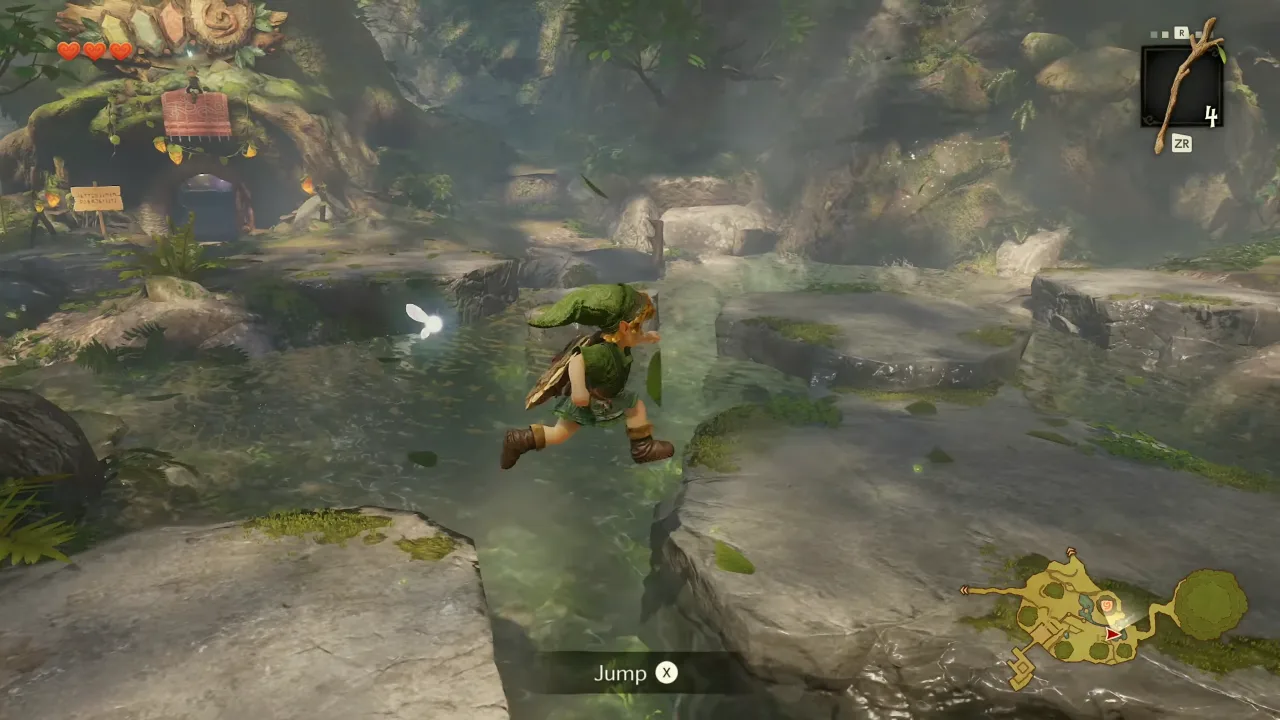
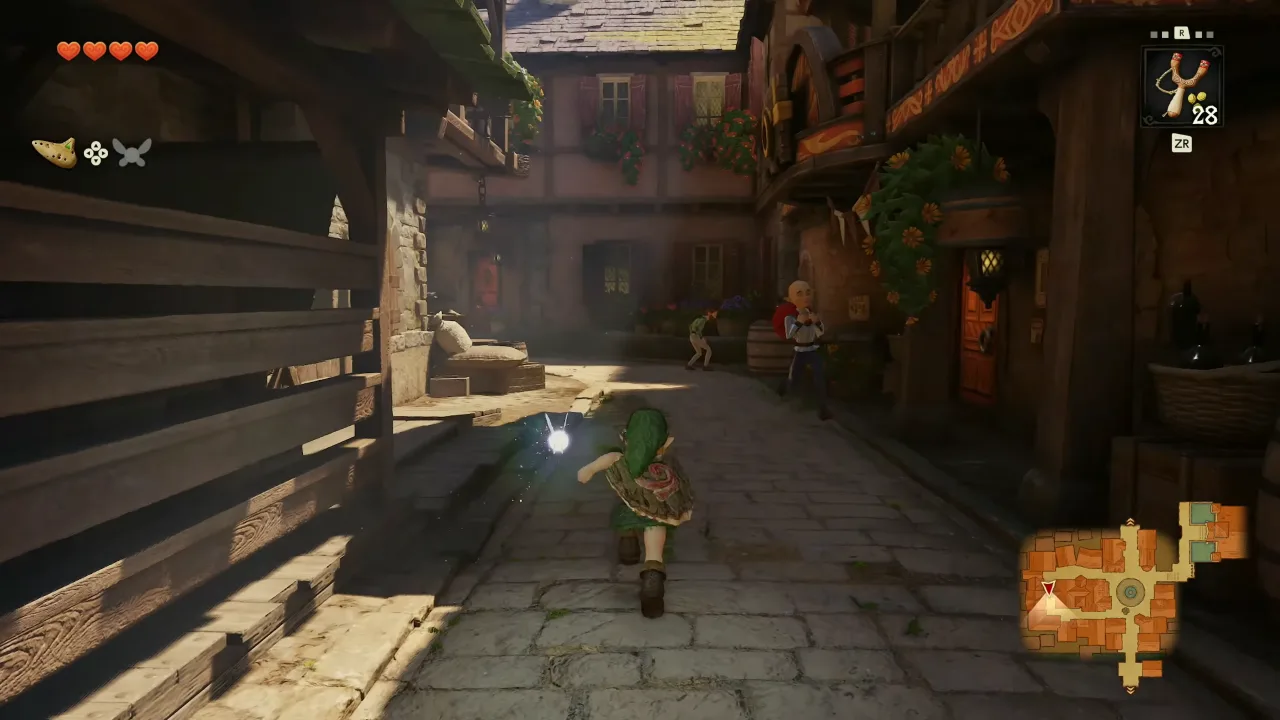
Camera. The right stick turns the camera everywhere. Castle Town is no longer a set of fixed pre-rendered views: you walk its streets yourself and turn the camera freely.
Items. A quick-select bar lets you change the active item without opening the pause menu. The ocarina, the Lenses of Truth (now worn as goggles) and the Iron Boots are on the directional buttons, which removes most of the menu trips in the Water Temple. Motion aiming is available for ranged items and can be turned off.
How do saving and time work now?
One save file. Each user profile has a single save. The game autosaves, and when you load it you continue where you saved rather than at Link’s house or the Temple of Time. Choosing a new game overwrites the file, so be careful on the title screen.
Time passes everywhere. After your first meeting with Princess Zelda, day and night also change inside Castle Town, Kakariko Village and other places where the clock used to stop. People follow daily routines, and some only appear at certain times. Link can also sleep in beds found around Hyrule.
How do you keep track of where to go?
Threads of Time is the remake’s quest log. It records the main story and most side quests on a tapestry that fills in as you play, and shows what to do next. Navi still explains enemies and speaks in cutscenes, but she no longer keeps reminding you where to go.
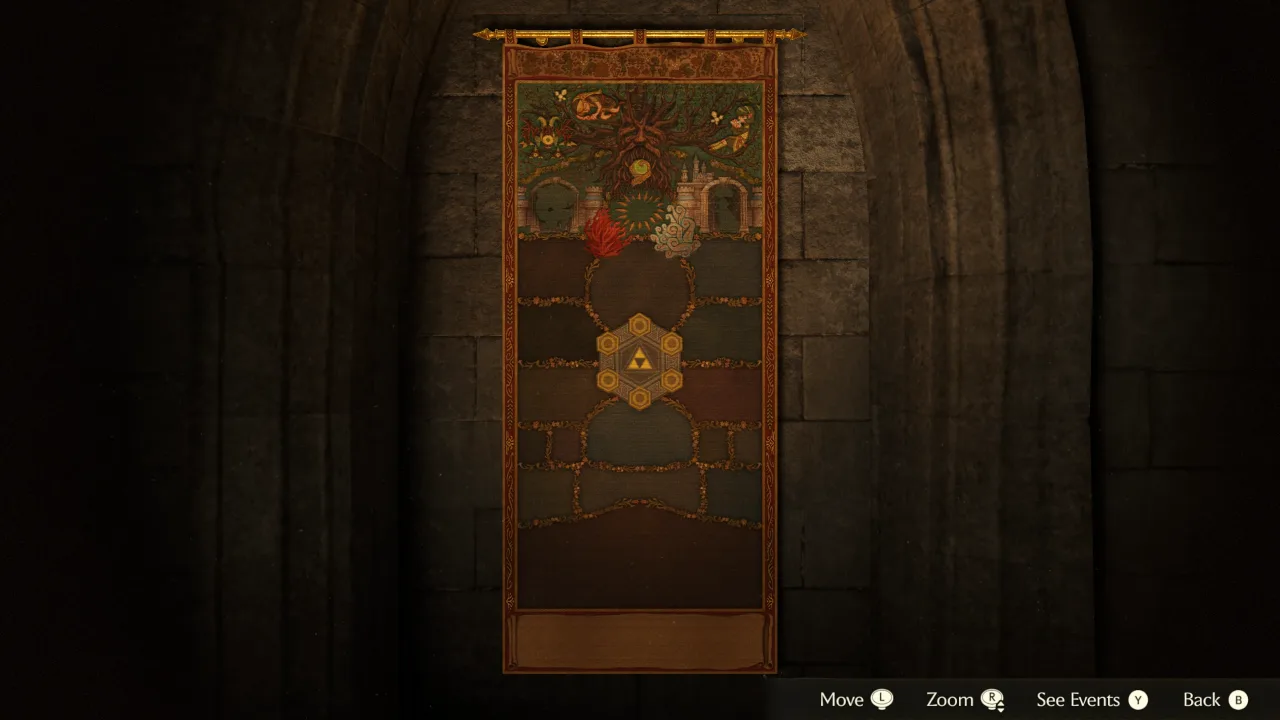
Hidden grottos are also easier to find, because their entrances are now visible on the ground.
What is the boss rematch hall?
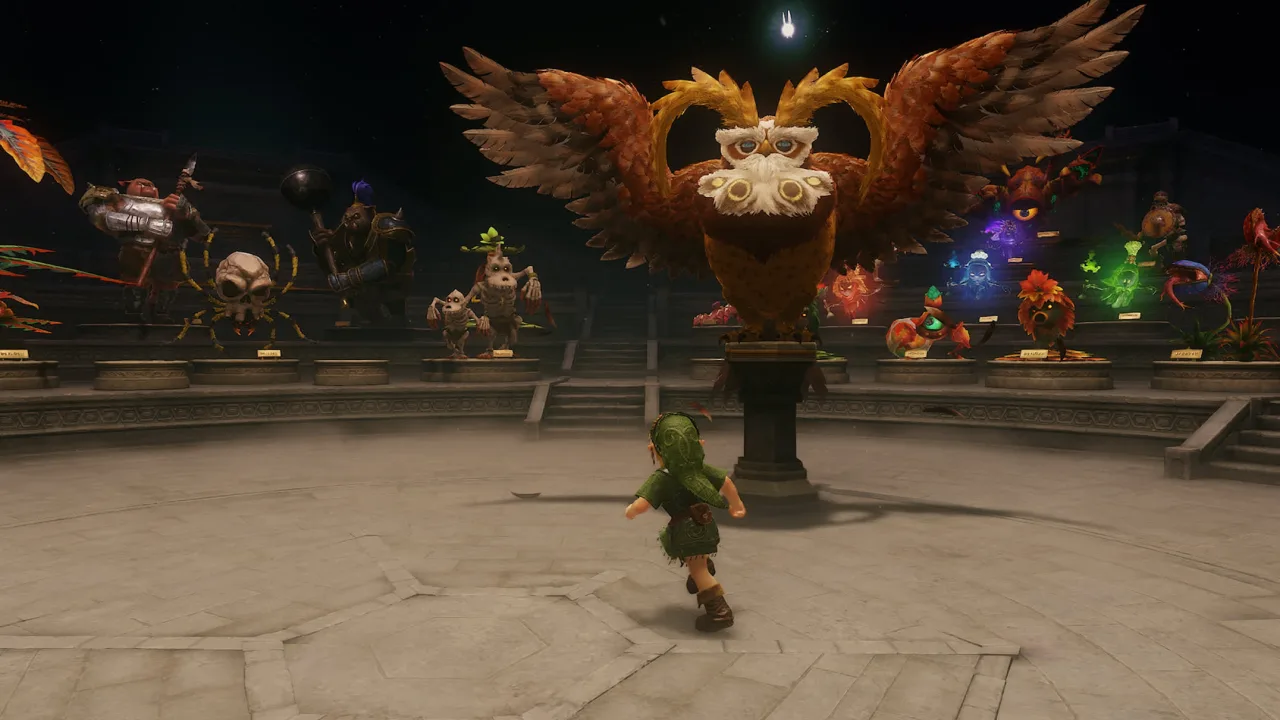
The remake adds a hall full of statues of the monsters you have defeated. Its English name is Hall of Fallen Foes.
- When it opens: after you finish the Forest Temple. From then on, beds that glow green take Link there when he sleeps in them.
- What is inside: a statue for each type of enemy you have beaten, with information about it. Bosses and minibosses can be fought again as often as you like, and the game records your best time. The Hall of Fallen Foes guide has the full rules.
- Boss runs: three trials open as the story progresses. The first two cover the child-era and adult-era dungeon bosses; the last, Trial of the Hero of Time, opens after the ending and runs through every boss. Finishing a trial puts an owl trophy on a shelf in Link’s house.
What changed in the world and dungeons?
- Bottles: there are five. The new one is the first you can get, from a short errand at the Castle Town Potion Shop. See all five bottles.
- Wallets: 200 rupees at the start, 500 and 1,000 after the two Gold Skulltula rewards. See item upgrades.
- Great Fairies: each asks for a rupee offering on your first visit. The summit fairy on Death Mountain now gives Din’s Fire, and the one near Hyrule Castle gives the improved spin attack. See Great Fairy Fountains.
- Trading sequence: the timed deliveries for the Biggoron Sword have new limits of 4:00, 2:30 and 3:30. See Biggoron Sword.
- Places: several areas, including Kakariko Village, are laid out differently; Lon Lon Ranch is reached from Hyrule Field without a loading screen; and the castle courtyard sneaking section is shorter.
- Dungeons: the overall structure is the same, but some rooms, puzzles, chests and Gold Skulltulas moved or were removed. The Water Temple changed the most and is simpler than before.
Do you need to sing or buy an ocarina?
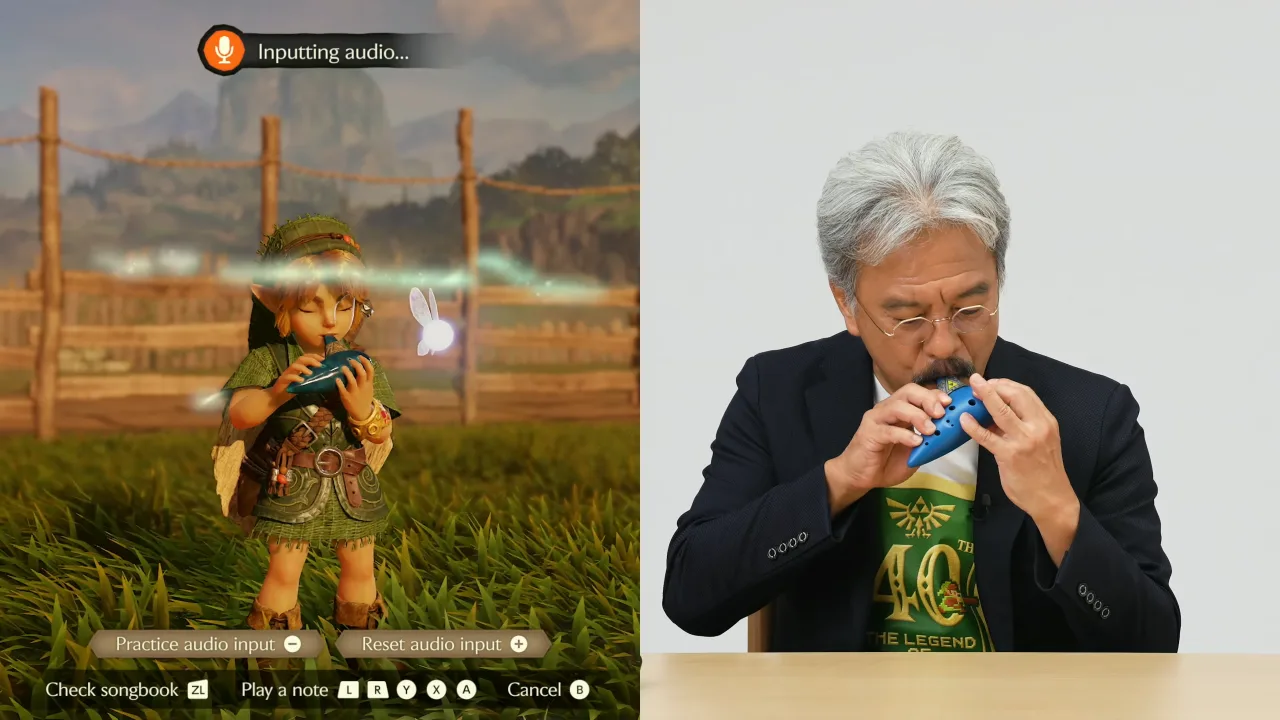
No. Every song can be played with buttons. The microphone is an extra: hum a learned melody, or play it on a real instrument, near the Switch 2 and Link plays it in the game. External microphones may not be recognised correctly. The HORI electronic ocarina and Nintendo’s own playable ocarina are optional accessories. For the songs themselves, see the ocarina song guide.
What about voices, performance and extras?
- Voice acting: many cutscenes are voiced; Link stays silent. Not every line in the game is voiced.
- Performance: Nintendo has not published frame-rate or resolution figures for the game.
- amiibo: existing Zelda series figures give useful items. The new Young Link and Young Zelda figures, which give retro-style masks, are due in 2027. See the amiibo update.
- ZELDA NOTES: the phone service works with the game without a Nintendo Switch Online membership. See the ZELDA NOTES guide.
- Master Quest: not included. Reportedly there is no separate harder difficulty setting either. See Master Quest.
New to the game? Start with the full introduction, the beginner tips and the remake FAQ.
FAQ
Is the Switch 2 version a remake or a higher-resolution port?
How many save files does the Ocarina of Time remake have?
Do I have to use the microphone or motion controls?
Does the remake have Master Quest or a boss rush?
Can I use an N64 walkthrough for the remake?
Related Articles
guides
Ocarina of Time Remake Beginner Tips: Controls, Saving, Item Order
Beginner tips for the Switch 2 Ocarina of Time remake: the new controls, saving, child and adult Link, the order you get key items and where new players get stuck.
guides
Ocarina of Time: Switch 2 Remake vs N64 vs 3DS
Compare the N64 original, Ocarina of Time 3D and the released Switch 2 remake: controls, saving, hints, extra modes, Master Quest and dungeon changes.
guides
How to Play Ocarina of Time Now: Switch 2, Switch Online, 3DS
How to play Ocarina of Time today: the Switch 2 remake first, then the N64 version on Switch Online and the 3DS version, with saves and controls compared.
Was this helpful?
Thanks for the feedback!